Quick answer
What to know first
Rodent proofing is not just sealing holes. It works when entry points, food sources, active runways, and traps are handled together so new rodents cannot replace the ones removed.
Start here
- Foundation gaps, utility openings, garage doors, vents, and roofline gaps
- Droppings, gnaw marks, grease marks, nesting material, or scratching sounds
- Food access from pantry items, pet food, garbage, or bird seed
Highest-impact prevention steps
- Install door sweeps and repair damaged screens or vents.
- Store pantry items in sealed containers.
- Trim vegetation away from walls and roof edges.
- Check attics, garages, and basements seasonally.
Why activity becomes established
Rodent proofing works when exclusion, trapping, sanitation, and monitoring happen together. Mice can enter very small gaps, and rats often exploit utility openings, foundation defects, vents, and doors.
Entry points, attractants, and warning clues
Droppings along walls, cabinets, or stored items
Droppings along walls, cabinets, or stored items
Gnaw marks on packaging, wiring, or wood
Gnaw marks on packaging, wiring, or wood
Scratching sounds in walls or ceilings at night
Scratching sounds in walls or ceilings at night
Grease marks or runways along edges
Grease marks or runways along edges
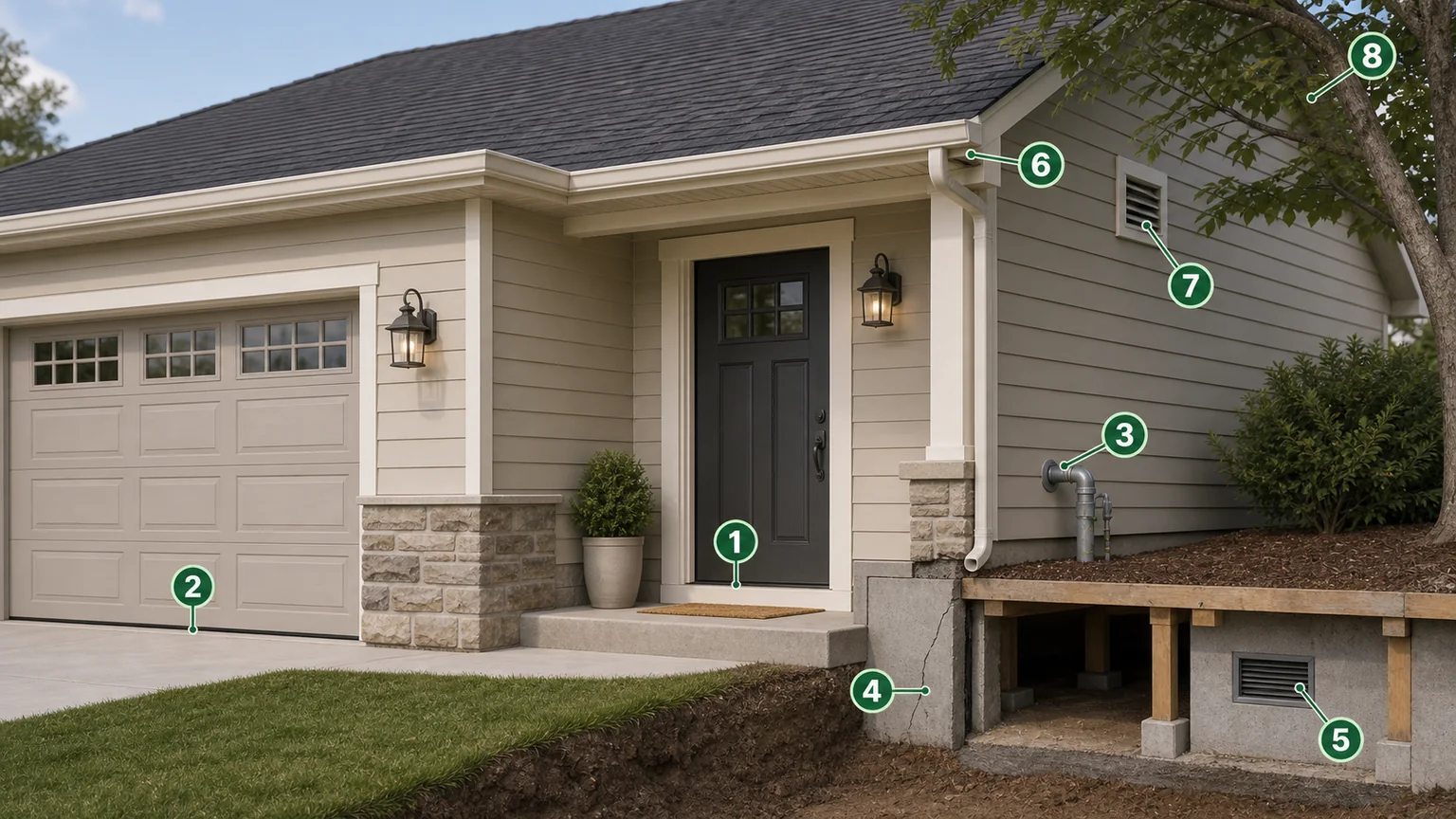
Area-by-area checklist
- 1
Inspect the exterior from ground level to roofline for gaps and utility openings.
Inspect the exterior from ground level to roofline for gaps and utility openings.
- 2
Seal mouse gaps larger than 1/4 inch and rat gaps larger than 1/2 inch.
Seal mouse gaps larger than 1/4 inch and rat gaps larger than 1/2 inch.
- 3
Use traps along walls where droppings or runways appear
Use traps along walls where droppings or runways appear.
- 4
Remove food, pet food, bird seed, and garbage access
Remove food, pet food, bird seed, and garbage access.
What people commonly miss
Using foam alone on rodent entry points
Using foam alone on rodent entry points
Ignoring tiny mouse-sized gaps around pipes and doors
Ignoring tiny mouse-sized gaps around pipes and doors
Cleaning evidence before mapping where activity is strongest
Cleaning evidence before mapping where activity is strongest
Monitoring routine
- Recheck on a consistent schedule: Foundation gaps, utility openings, garage doors, vents, and roofline gaps
- Recheck on a consistent schedule: Droppings, gnaw marks, grease marks, nesting material, or scratching sounds
- Recheck on a consistent schedule: Food access from pantry items, pet food, garbage, or bird seed
Signs prevention is failing
- New, recurring, or spreading evidence: Droppings along walls, cabinets, or stored items
- New, recurring, or spreading evidence: Gnaw marks on packaging, wiring, or wood
- New, recurring, or spreading evidence: Scratching sounds in walls or ceilings at night
- New, recurring, or spreading evidence: Grease marks or runways along edges
What to do if activity appears
Call a professional for roofline entry, repeated indoor activity, large droppings, wiring damage, or signs in inaccessible spaces.
- Install door sweeps and repair damaged screens or vents.
- Store pantry items in sealed containers.
- Trim vegetation away from walls and roof edges.
FAQ
Can mice enter through tiny holes?
Yes. A mouse can enter through openings about the size of a pencil, so small gaps matter.
Should entry points be sealed before trapping?
Seal likely outside entry points while also trapping indoors, so rodents are not simply replaced by new arrivals.
Found signs despite prevention?
Upload the specimen or evidence before deciding what to do next.
Identify the evidenceExplore next
Continue with verified context
Related pest profiles
Related evidence
Related guides
Reviewed guidance · Last reviewed August 2026
Based on Pest Or Not verified knowledge and authoritative pest-management references.
How we review content